Boiler Repair in Bellerose, Queens
Reliable heating diagnostics and physical restoration for residential steam boilers and hydronic hot water systems. When winter temperatures drop along Jamaica Avenue and throughout Bellerose, our experienced technicians resolve no-heat emergencies, burner failures, pressure anomalies, and leaking valves.
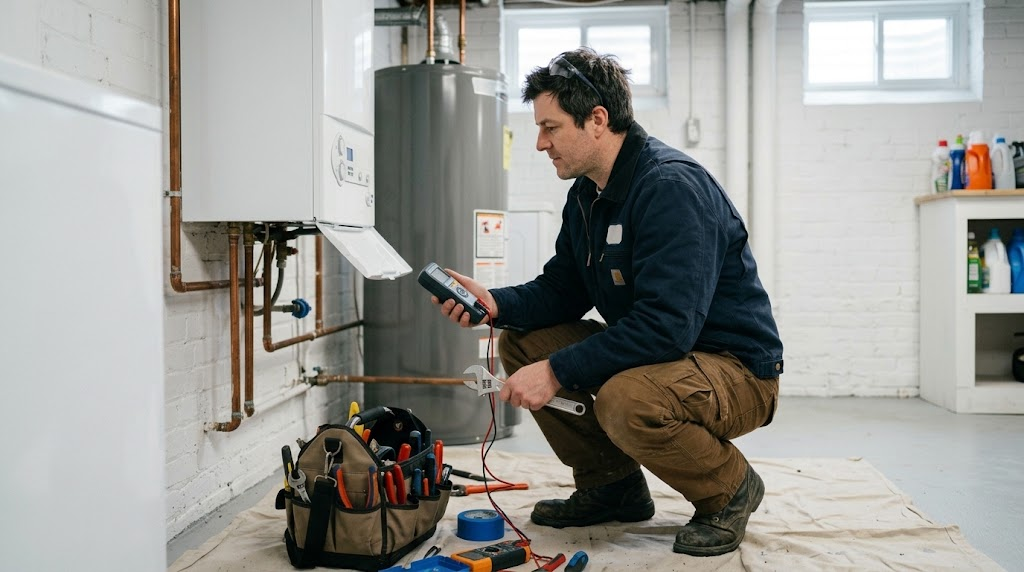
Understanding Heating Challenges in Bellerose Homes
Detached colonial residences, brick Tudor properties, and cape homes across Bellerose and nearby neighborhoods rely heavily on heavy-duty basement heating plants.
In Bellerose and surrounding Queens residential streets bordering the Cross Island Parkway and the Creedmoor area, residential heating infrastructure reflects decades of solid construction. Many single-family and semi-detached homes operate single-pipe low-pressure steam systems or closed-loop hydronic boilers installed in basement mechanical spaces. These units endure intense seasonal cycling when cold Atlantic winds blow across eastern Queens.
When a heating plant experiences unexpected lockouts, homeowners face sudden comfort loss. Whether you require prompt gas boiler repair Bellerose Queens to restore burner ignition, or urgent troubleshooting for a boiler not working Bellerose Queens on an icy morning, systematic diagnostic testing isolates electrical control failures, sediment blockage, or mechanical relief valve weeping without unnecessary parts replacement.
Homeowners in Bellerose Manor seeking dependable boiler repair near Bellerose Manor count on our experienced diagnostic team to inspect sight glasses, test low-water cutoffs, inspect cast-iron sections, and evaluate flue gas draft to guarantee safe winter operation.
Key Mechanical Warning Signs
If your basement boiler exhibits any of the following symptoms, schedule an evaluation before a complete system shutdown occurs:
-
Continuous Burner Cycling: The burner ignites frequently for only a few minutes before short-cycling off, pointing toward pressure switch miscalibration or restricted water circulation.
-
Pressure Relief Valve Dripping: Water discharging from the 30 PSI hydronic relief valve or 15 PSI steam safety valve signals waterlogged expansion tanks or thermal expansion issues.
-
Metallic Clanging or Kettle Rumbling: Boiling noises inside cast-iron sections typically indicate heavy mineral scale accumulation or restricted flow through supply headers.
-
Unresponsive Zone Valves: Individual floors remain chilly while the boiler runs constantly, indicating failed zone motor actuators or air-bound distribution lines.
Steam vs. Hot Water (Hydronic) Heating Systems
Diagnostic protocols differ significantly depending on whether your home is heated by circulating hot water or vaporized steam.
| Heating System Type | Operating Pressure | Critical Diagnostic Components | Common Failure Modes |
|---|---|---|---|
| Low-Pressure Steam Boiler | 0.5 to 2.0 PSI | Sight glass, Low-Water Cutoff (LWCO), Pressuretrol, Pigtail siphon, Air vents | Low-water lockout, clogged pigtail trapping high pressure, surging water line, banging radiator pipes |
| Hydronic (Hot Water) Boiler | 12 to 18 PSI (cold to hot) | Circulator pump, Expansion tank, Automatic air scoops, Aquastat relay, Zone valves | Air-bound radiators, seized circulator motor, ruptured expansion bladder, zone valve head failure |
| High-Efficiency Condensing Boiler | 12 to 20 PSI closed loop | Condensate trap, Outdoor reset sensor, Stainless heat exchanger, ECM variable pump | Blocked condensate drain lines, scaled secondary heat exchanger, flame sensor error codes |
Steam Boiler Maintenance Requirements
When providing steam boiler repair Bellerose Queens, our technicians verify that the boiler water level rests precisely midway up the gauge glass. Mud and sediment accumulation in the low-water cutoff float chamber can prevent the electrical safety contacts from opening during dry-firing conditions, posing catastrophic hazard. Regular seasonal blowdowns and cleaning of the brass pigtail siphon ensure the pressuretrol accurately senses system vapor pressure.
Hydronic System Pressure Regulation
For homes requiring hot water boiler repair Bellerose Queens, maintaining stable closed-loop pressure is vital. If the internal diaphragm of the expansion tank loses its pre-charged air cushion, rising heating temperatures cause water to expand uncontrollably, tripping the safety relief valve. Our technicians test tank charge, service pressure-reducing auto-fill valves, and purge entrapped air from second-floor baseboards.
What to Expect During a Boiler Repair Visit
When our heating technicians arrive at your Bellerose residence, we follow a systematic, safety-first protocol to identify the underlying failure before turning any wrench.
Thermostat & Control Check
We measure 24V control circuit voltages, inspect thermostat anticipator settings, and check safety switches for continuity.
Burner & Ignition Testing
Technicians inspect pilot assemblies, electronic spark igniters, flame rectification sensors, and gas valve manifold pressures.
Hydronic & Steam Safety
We verify low-water cutoff operation, examine pressure relief valves, inspect gauge glasses, and check expansion tank pre-charge.
Flue Draft & Venting Check
We evaluate chimney draft conditions, inspect the draft hood or power venter, and confirm zero carbon monoxide spillage into the mechanical room.
Repair vs. Replacement: When Is It Time for a New Boiler?
Not every boiler problem requires replacing the entire heating appliance. Heavy cast-iron boilers manufactured decades ago are renowned for their durability. When individual external controls fail—such as an aquastat, gas valve, thermocouple, or circulator pump—a targeted repair is frequently the most practical, economical solution.
However, replacement becomes necessary when the heat exchanger itself develops structural failure. Water pooling beneath cast-iron push nipples, severe horizontal section cracking, or persistent flue gas condensation corrosion indicates that the heat exchanger has reached the end of its safe operational life.
Homeowners in surrounding neighborhoods inquiring about boiler repair near Queens Village or boiler repair near Glen Oaks can rely on our transparent assessments. If a repair provides years of safe additional service, we explain the repair path clearly. If equipment age and cracked sections demand replacement, we evaluate system sizing and explain the options without high-pressure sales tactics.
Factors Affecting Repair Feasibility
-
Heat Exchanger Integrity: Intact cast-iron sections warrant targeted part replacement; cracked castings dictate immediate replacement.
-
Equipment Age & Parts Availability: Boilers under 20 years typically have abundant replacement controls and gas valves in standard stock.
-
Combustion Efficiency & Fuel Bills: Upgrading from an antiquated 65% AFUE boiler to a modern modulating system can significantly reduce winter gas expenses.
-
Chimney & Venting Condition: Deteriorated clay chimney flues may require stainless steel lining or direct-vent PVC conversion.
Comprehensive Heating & Residential Plumbing Services
Beyond boiler troubleshooting, NY Plumbing provides complete residential plumbing care tailored to Bellerose homes. Explore our dedicated service offerings below:
Boiler Replacement
When older cast-iron boilers crack or reach the end of their operational lifecycle, our team engineers proper BTU load calculations and installs high-efficiency steam and hydronic heating systems designed for New York winters.
Explore Replacement →Steam Heat & Radiator Repair
Banging steam pipes, hissing air valves, and cold cast-iron radiators are resolved through precision vent balancing, valve repacking, pipe pitch correction, and steam trap maintenance across multi-level residences.
View Radiator Services →Water Heater Repair
Restore reliable domestic hot water with expert diagnostics on gas burner thermocouples, pilot assemblies, electric elements, and indirect water heater storage tanks connected to your central boiler.
Water Heater Diagnostics →Sewer Line Repair
High-definition sewer camera inspections locate subterranean root intrusion, cracked vitrified clay joints, and collapsed building laterals connecting private homes to municipal Queens sewer mains.
Sewer Inspection & Care →Sump Pump & Flood Protection
Defend your basement mechanical room from intense storm groundwater and sewer backups through heavy-duty submersible sump pump maintenance, dual battery backups, and backwater valve installations.
Basement Flood Defense →Gas Line Repair & Inspection
Licensed plumbing procedures for gas supply piping pressure testing, boiler gas cock replacements, kitchen range hookups, and NYC Local Law 152 periodic gas piping compliance assessments.
Gas Piping Services →Drain Cleaning
Clear stubborn main drain blockages, kitchen grease accumulations, and slow bathroom stacks using commercial mechanical snakes and targeted hydro jetting without damaging historic residential piping.
Clog Removal & Snaking →Toilet Repair
Address continuously running tanks, faulty fill valves, cracked wax rings causing subfloor water staining, and persistent flapper leaks that waste thousands of gallons of water annually.
Toilet Leak Solutions →Faucet Repair & Fixture Installation
Repair dripping sink faucets, rebuild worn ceramic cartridges, upgrade corroded shutoff angle stops, and install modern kitchen and bath fixtures with guaranteed leak-free connections.
Fixture & Tap Care →No Heat Emergency Guidance
When dealing with sudden no heat boiler repair Bellerose Queens during freezing weather, inspect the emergency service switch (often marked with a red faceplate at the top of the basement stairs) to ensure it was not accidentally toggled off. Check your circuit breaker box and thermostat batteries. If the system fails to fire, do not attempt to bypass safety controls. Call our direct line immediately to prevent domestic pipes from freezing.
Frequently Asked Questions About Boiler Repair
Common questions from Bellerose homeowners regarding boiler troubleshooting, steam heat, and hydronic system maintenance.
A steam boiler may refuse to ignite due to a tripped low-water cutoff switch, an oxidized pilot thermocouple, defective electronic spark module, misadjusted pressuretrol, or thermostat wiring failure. Furthermore, if sediment blocks the brass pigtail siphon tube beneath the pressure sensor, the switch may falsely register high pressure and lockout the burner.
Steam systems boil water into vapor under low pressure (0.5 to 2 PSI) and rely on open venting to displace air from pipes and cast-iron radiators. Hot water (hydronic) systems operate as pressurized closed loops (12 to 18 PSI) requiring circulator pumps, automatic air purgers, and diaphragm expansion tanks to distribute warmth smoothly without boiling.
Any active discharge from a boiler safety relief valve requires urgent evaluation. In hot water systems, continuous discharge points to a ruptured expansion tank bladder or failing automatic feed valve. In steam systems, weeping valves indicate excessive pressure or sediment holding the valve seat open. Running a boiler with leaking valves can cause low-water dry firing.
In many instances, yes. Heavy cast-iron boilers frequently outlast their mechanical controls. Replacing a faulty gas valve, upgrading to an electronic low-water cutoff, installing a new circulator cartridge, or cleaning the burner tubes can restore dependable heating for several more winter seasons, provided the cast-iron heat exchanger sections remain crack-free.
Schedule Boiler Diagnostics in Bellerose, Queens
Speak directly with our local heating dispatch coordinators. Describe your boiler symptoms, and we will guide you through safety precautions and schedule a technician to inspect your heating system.
Call (315) 202-8009